
Are Fitting Parts Ready for Rough Missions?
What "Fitting Parts" Actually Covers in Tracked Vehicle Applications
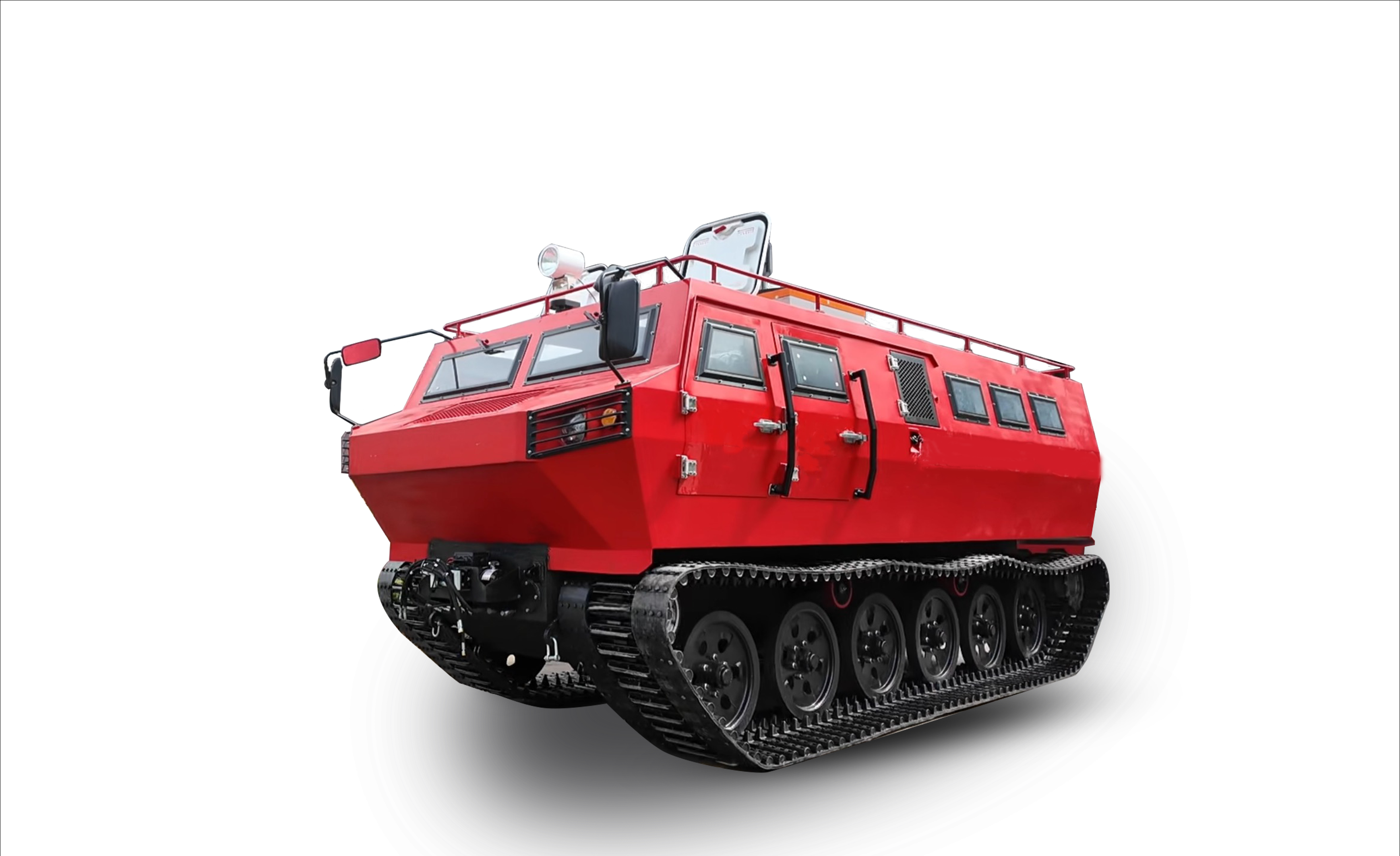
The term gets used broadly, but in the context of all-terrain and amphibious tracked carriers, fitting parts typically refers to the mechanical components that make up the drive system and undercarriage — the parts that keep the track engaged, the vehicle moving, and the structure stable under load.
For a platform like the BV206, this includes:
- Rubber tracks — the primary interface between the vehicle and the ground, directly affecting traction, ground pressure distribution, and ride behavior on soft or uneven surfaces
- Drive sprockets and hub assemblies — transferring power from the drivetrain into track movement; wear here translates into tracking inconsistency and increased stress on adjacent components
- Road wheels — supporting the vehicle weight along the track, with wear patterns that vary significantly depending on surface type and load profile
- Support wheels and support wheel arms — maintaining track geometry between drive and idler positions, especially important on surfaces with embedded obstacles or abrupt elevation changes
- Track tensioners — controlling track slack, which directly affects how the rubber track seats against the sprocket and road wheels during operation
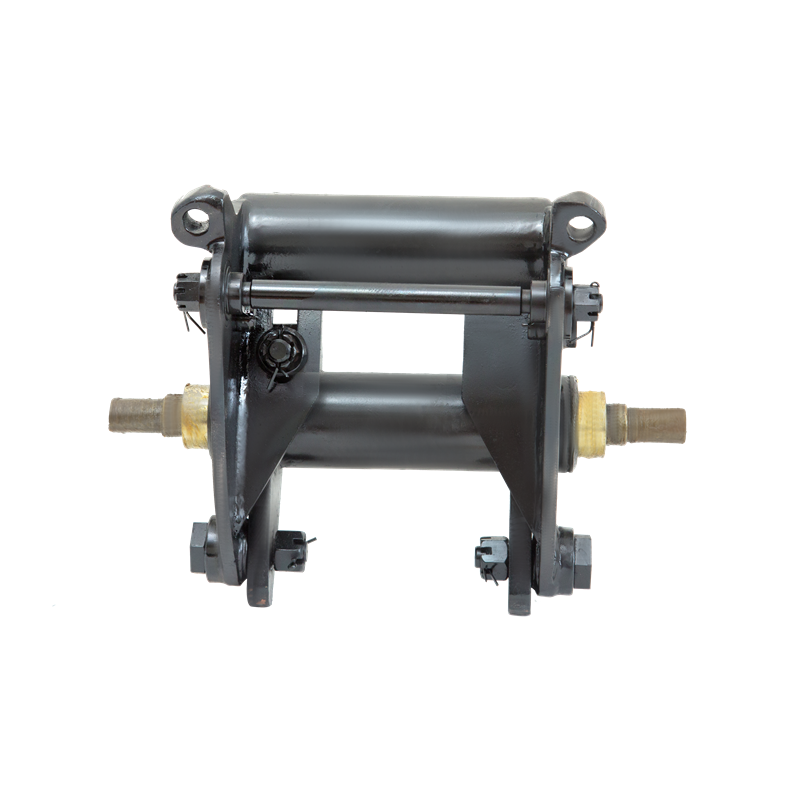
- Swing arms and torsion springs — providing the suspension response that keeps the vehicle composed on irregular ground and helps protect the track and undercarriage from impact loading
- Seal rings for drive sprockets — preventing contamination ingress into bearing and drive interfaces, where even minor infiltration can accelerate wear significantly
Each of these fitting parts plays a defined role. A weakness in any one of them tends to create secondary effects across the others.
Why Track-Side Fitting Parts Wear Faster in Demanding Terrain
The BV206 and similar tracked platforms are designed for terrain where wheeled vehicles lose traction or become stuck — marshland, deep snow, loose sand, rocky hillsides, flooded routes. Operating in these environments is exactly what these vehicles are built for, but it also means the undercarriage is under heavier and more variable loading than in standard vehicle applications.
A few conditions that accelerate fitting part wear in demanding deployments:
- Abrasive surfaces. Rocky terrain and compressed gravel cut into rubber track compounds and contact surfaces on road wheels and sprockets more aggressively than soft ground. Even on snow, ice-embedded debris creates abrasion that builds up quietly over many operating hours.
- Continuous load cycling. Rescue, utility, and patrol operations rarely follow predictable load patterns. Vehicles move between empty runs and fully loaded personnel or cargo missions, often in the same shift. This variation in dynamic load puts repeated stress on suspension components — swing arms, torsion springs — that is different from the steady load assumed in basic service interval calculations.
- Water and contamination exposure. Amphibious capability is a core strength of platforms like the BV206, but regular water crossings mean that seal integrity at drive sprocket interfaces matters more than it would in a dry-duty vehicle. Seal ring condition is easy to overlook until contamination has already reached bearing surfaces.
- Temperature extremes. Rubber compounds in tracks and seals perform differently at -30°C versus +40°C. Fitting parts selected without considering the temperature range of the intended operating environment may degrade faster than expected at either end of that range.
How Component Selection Affects Undercarriage Service Life
Operators who have managed BV206 fleets over extended periods often point to component quality as a more consequential variable than service interval length alone. A well-specified rubber track running slightly beyond its nominal replacement interval will often outperform a lower-grade track changed on schedule.
Several factors are worth considering when selecting fitting parts:
- Material consistency in rubber tracks. Track compound formulation affects resistance to tearing, cut propagation, and edge wear. Tracks with inconsistent compound mixing tend to develop localized wear patterns that shorten useful life even if overall rubber volume is adequate.
- Dimensional accuracy of drive sprockets and hubs. Drive sprockets machined to tight dimensional tolerances engage the track links consistently across the full rotation. Even small deviations in tooth geometry create load concentration points that accelerate both track wear and sprocket wear simultaneously.
- Torsion spring rate consistency. Suspension behavior depends on torsion springs performing predictably. Springs that are near-tolerance on rate introduce handling asymmetry — the vehicle responds differently on one side than the other — which operators typically notice as steering instability rather than as a suspension problem.
- Seal ring material grade. In drive sprocket applications on amphibious platforms, seal ring durability in wet conditions is as important as dry-condition wear resistance. Seals that perform adequately in controlled testing but degrade with repeated immersion cycles create contamination paths that are difficult to detect until damage has already occurred.
Matching Fitting Parts to Real Operational Demands
Fleet managers running tracked all-terrain vehicles across different operational roles — rescue response, border patrol, agricultural transport, flood relief — typically find that fitting part selection benefits from being mission-specific rather than universal.
A vehicle that spends the majority of its operating hours on snow and soft ground has different track wear priorities than one primarily used on compacted mountain paths. Support wheel and swing arm demands differ between high-load cargo runs and personnel transport missions.
Before sourcing fitting parts, it is worth working through a few practical questions:
- What terrain types does this vehicle operate on frequently, and what proportion of operating hours involve hard surfaces?
- What is the typical payload range, and does the vehicle regularly operate near or at its load capacity?
- What is the water exposure profile — shallow crossings only, or regular full-amphibious operation?
- What temperature range does the vehicle operate across, and does it include extended cold-start conditions?
- What is the realistic service interval for this platform, and how does that affect the acceptable wear rate for each fitting part category?
Working through these questions before a procurement decision produces better outcomes than selecting parts based on catalog specifications alone.
The Role of Fitting Parts in Fleet Readiness
For organizations where vehicle availability is directly linked to operational capacity — emergency services, disaster relief teams, specialized utility operators — fitting part reliability has a direct impact on mission outcomes.
An unplanned track failure during a flood relief operation or a drive sprocket problem mid-patrol is not simply a maintenance inconvenience. It takes a vehicle out of service at a moment when it is needed, puts additional pressure on remaining fleet assets, and can require field repair in conditions that are far from workshop-standard.
This is why experienced fleet operators treat fitting parts as a readiness investment rather than a cost line. Selecting components that hold up across the operating cycle, maintain consistent performance across terrain and temperature variation, and reach the end of their service life predictably — rather than failing without warning — reduces operational risk in ways that extend well beyond the workshop.



 浙ICP备2022029871号