
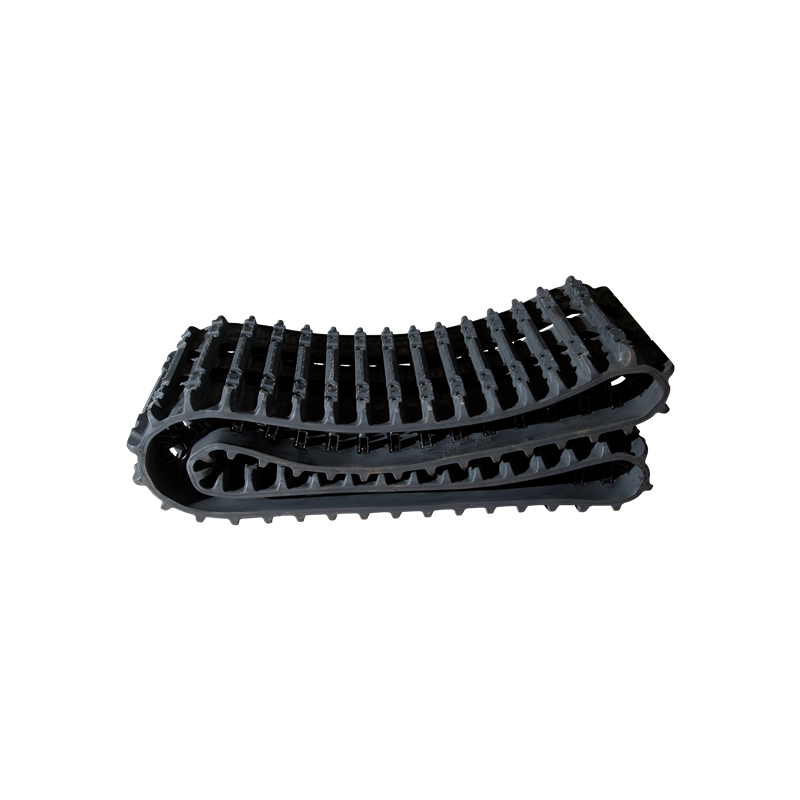
Rubber Tracks Series Enhance Equipment Versatility
In the world of compact construction and agricultural equipment, the choice of undercarriage components is crucial for operational success. Among these, the Rubber tracks series has become a vital consideration for owners and operators of machines like mini excavators and compact track loaders. Selecting the appropriate Rubber tracks series is not a one-size-fits-all decision; it directly influences a machine's traction, stability, and impact on sensitive surfaces, requiring careful evaluation of tread design, technical specifications, and intended machine application to optimize performance and longevity.
How Do Tread Patterns Relate to Terrain?
The tread pattern of a Rubber tracks series is engineered for specific ground conditions. The many common pattern is the multi-directional block or C-shaped tread, designed for general use on mixed surfaces like dirt, gravel, and hard-packed soil commonly found on construction sites. For operations in more challenging environments, specialized Rubber tracks series are available. Zig-zag or V-shaped patterns, often directional (meaning they must be installed to rotate in a specific way), provide predominant cleaning action and grip in deep mud, wet clay, or snow. The lug height and spacing are also key; deeper, more aggressive lugs offer better flotation in soft terrain but may wear faster on abrasive hard surfaces. Choosing the wrong pattern for the job site can cause reduced efficiency, excessive track wear—potentially shortening service life by a noticeable percentage—and increased ground disturbance.
What Are the Key Specifications?
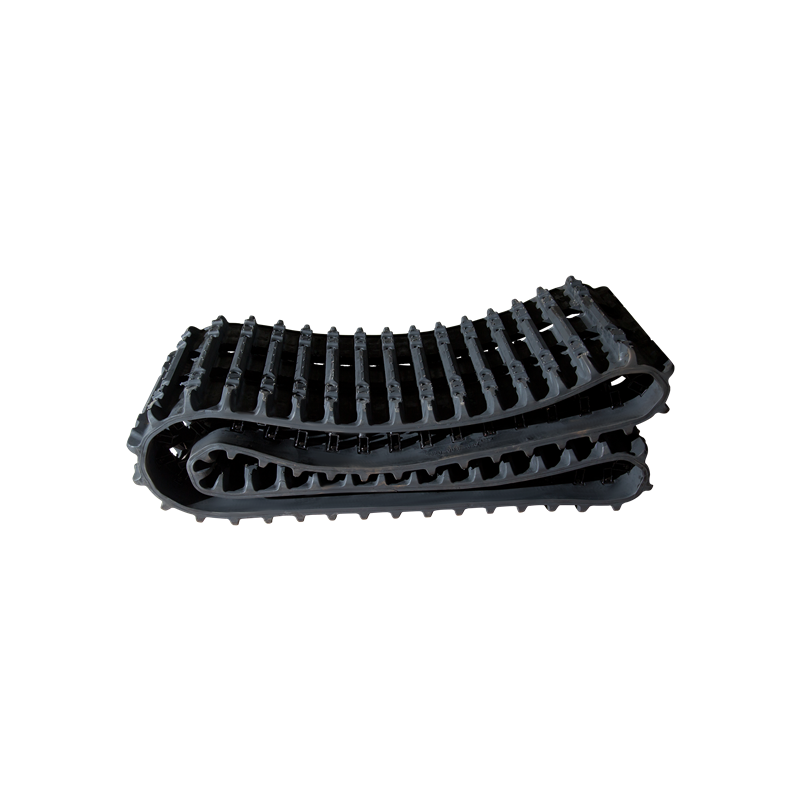
Correctly identifying the key physical specifications is the many critical step in selecting a Rubber tracks series. These specifications are non-negotiable for fit and function. The core dimensions are expressed in a standardized format: width, pitch, and number of links (e.g., 450mm x 86mm x 60 links). The width affects ground pressure and flotation, with wider tracks distributing weight over a larger area, a key feature for working on soft turf or muddy conditions. Equally important is the guide lug, or drive lug, configuration, typically denoted by a letter code (such as N, K, or T). This lug interfaces directly with the machine's sprockets and rollers, and an incorrect match will prevent installation or cause immediate damage. Operators must cross-reference their machine's model number with the Rubber tracks series manufacturer's compatibility charts to ensure a superb match.
Which Equipment Uses These Tracks?
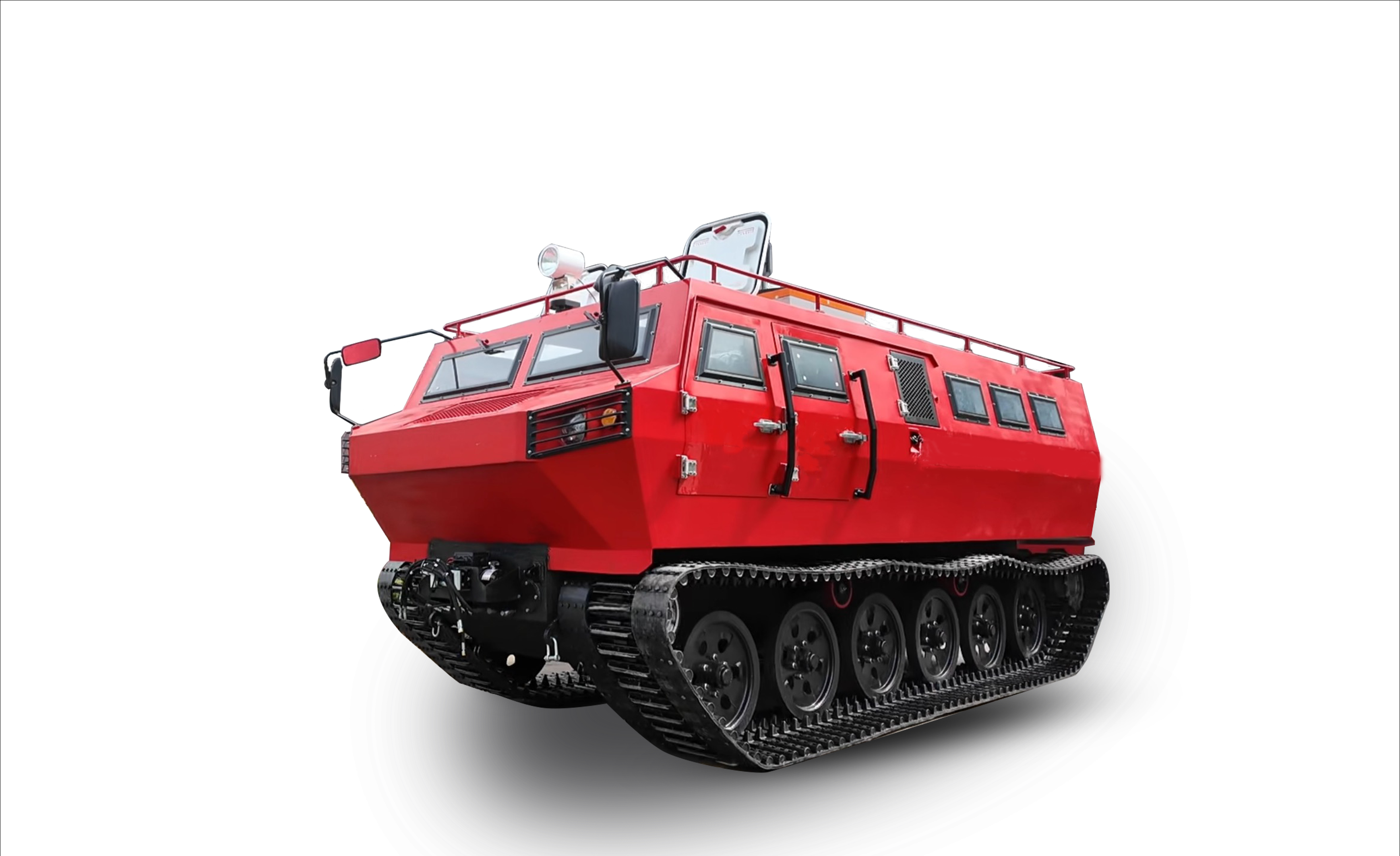
The Rubber tracks series is predominantly fitted to compact equipment where reduced ground pressure and surface protection are priorities. Mini excavators, ranging from 1 to 10 metric tons, are primary users, allowing them to work on landscaped yards, paved areas, and indoor demolition sites without causing damage. Compact track loaders (CTLs) rely heavily on specific Rubber tracks series to provide the traction and flotation needed for lifting and loading tasks in soft or wet conditions where wheeled machines would struggle. Furthermore, multi-terrain loaders (MTLs) and certain models of telescopic handlers also utilize these tracks to access confined or delicate work areas. The right Rubber tracks series transforms these machines from potentially destructive to site-friendly, expanding their usable range of applications significantly.
The future of Rubber tracks series development focuses on enhancing durability and application-specific performance. Innovations in rubber compounds aim to increase resistance to cuts, abrasion, and weathering, potentially extending service intervals. Furthermore, the integration of track tension monitoring systems is becoming more prevalent, helping operators maintain ideal pressure to improve track life and machine efficiency. For fleet managers and equipment owners, understanding the direct link between the chosen Rubber tracks series and job site demands is an essential part of equipment management, directly impacting project costs, timelines, and the machine's overall capability.
For compact construction and agricultural equipment requiring durable undercarriage solutions, the Rubber Tracks from LINHAI HAISDER MACHINERY CO.,LTD are a reliable choice. These tracks are designed to provide outstanding traction, flotation, and reduced ground pressure compared to steel tracks, making them ideal for mini-excavators, compact track loaders, and similar machinery operating on sensitive surfaces like lawns, pavements, or indoor floors. They help less ground damage while ensuring stable performance in various soil conditions. Offering a balance of strength and flexibility, these rubber tracks are built to withstand demanding work environments, supporting equipment mobility and productivity.



 浙ICP备2022029871号