
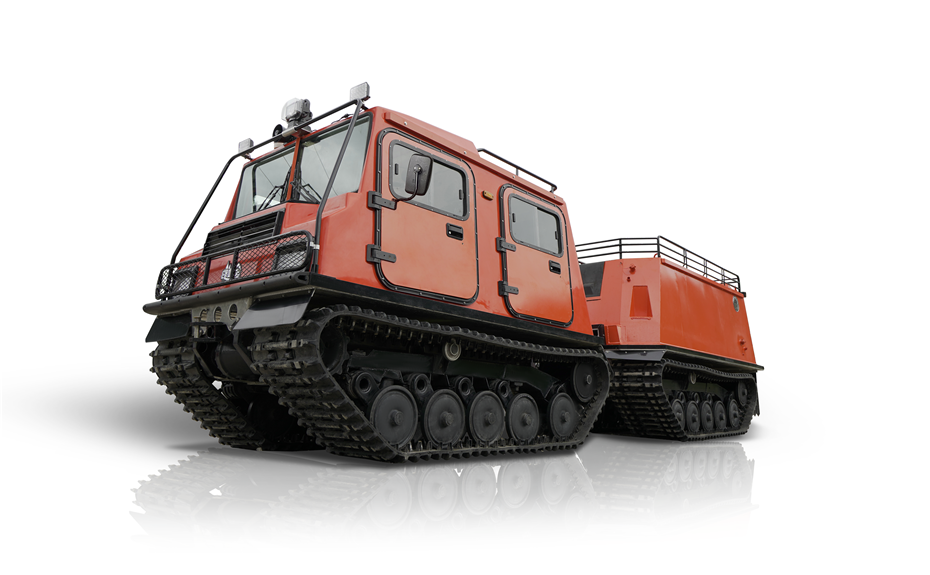
Tracked Carrier Payload Ratings and Frame Design
Frame Construction and Weld Quality
The main frame of a tracked carrier carries the payload, absorbs torsional loads from uneven ground, and serves as the mounting point for the undercarriage and hydraulic components. Steel grade selection matters, but so does weld design. A frame built from thick plate with continuous welds at high-stress junctions behaves differently from one assembled with stitch welds and gussets in secondary locations.
Fabrication shops that build tracked carrier frames typically use jig-based welding to hold dimensional accuracy across the run. Without a jig, frame squareness drifts, and that drift shows up downstream as misaligned track frames or hydraulic mounts that require field adjustment. Buyers reviewing a factory can ask how frames are fixtured during welding and how squareness is verified before the undercarriage is bolted on.
Undercarriage Layout and Track Selection
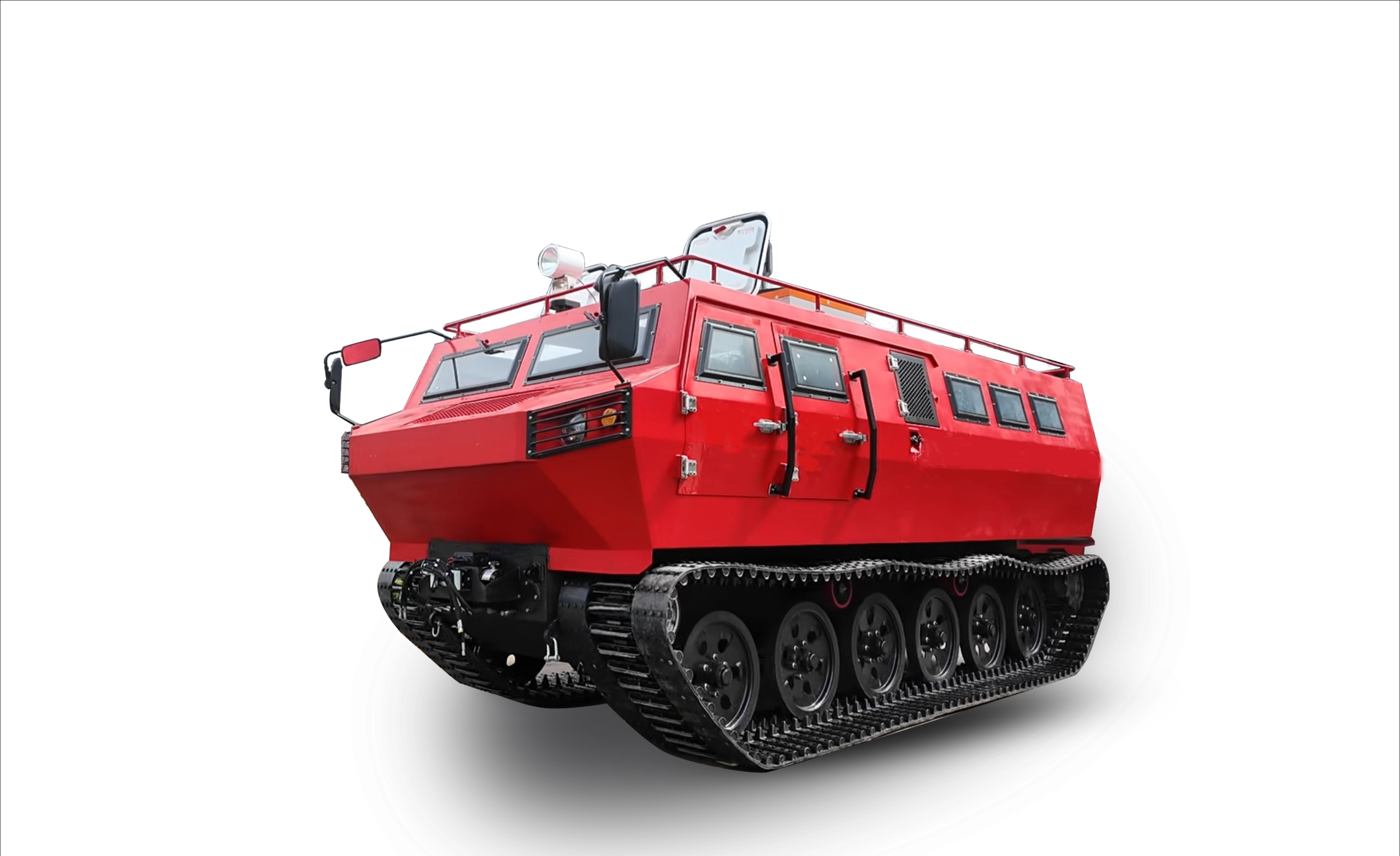
The undercarriage defines how a tracked carrier behaves on soft ground. Track width, ground pressure, and roller spacing all interact. A wider track footprint distributes load over a larger area, which helps on wet clay and loose gravel. Narrower tracks suit confined spaces where maneuverability matters more than flotation.
Track shoe design follows the same logic. Rubber tracks reduce ground disturbance and work well on paved surfaces and finished landscaping. Steel tracks with grouser bars grip better in loose soil and rock, at the cost of surface damage. Some tracked carrier models offer interchangeable track systems, which lets a buyer serve multiple applications from a single platform. That flexibility requires the undercarriage frame to accommodate different track frame dimensions without compromising alignment.
Drive System and Final Drive Integration
The drive system on a tracked carrier typically pairs hydraulic motors with planetary final drives at each track frame. This arrangement delivers torque directly to the sprocket without a long mechanical driveline. The trade-off is that final drive selection must match the machine's operating weight and duty cycle. An undersized final drive on a machine that routinely runs at rated payload will show wear earlier than expected.
Hydraulic circuit design also shapes performance. Two-speed drive motors allow the operator to trade speed for torque when ground conditions change. A well-designed circuit provides smooth transitions between speed ranges rather than abrupt shifts that stress the final drives. Buyers can ask suppliers about final drive sourcing and whether the hydraulic motors are matched to the pump output at the factory or specified independently.
Platform Deck and Load Distribution
The deck of a tracked carrier is where payload meets structure. Deck plate thickness, cross-member spacing, and tie-down point locations determine how a load sits and whether the deck deflects under concentrated weight. A deck designed only for uniform loads can develop permanent set when an operator drops a heavy attachment in one corner.
Good deck design includes reinforcement under high-load zones and tie-down points rated for the machine's intended applications. For buyers serving rental fleets, where operators may not respect load limits, deck robustness becomes a practical concern that affects repair costs and downtime. Suppliers who can describe their deck load testing approach are easier to evaluate than those who only quote a payload figure.
Application Profiles Across Industries
Tracked carriers show up in construction for moving materials across unfinished ground, in mining for hauling supplies through tunnels, and in agriculture for navigating wet fields without compaction. Each application asks something different of the machine. Construction users prioritize durability and payload. Mining operations value compact dimensions and reliable hydraulics. Agricultural users focus on low ground pressure and the ability to work in soft conditions.
A supplier who understands these profiles can advise on track type, deck configuration, and drive system options rather than quoting a standard model against every inquiry. For buyers building a product range, that advisory capability reduces the risk of mismatched specifications reaching end users.


 浙ICP备2022029871号